
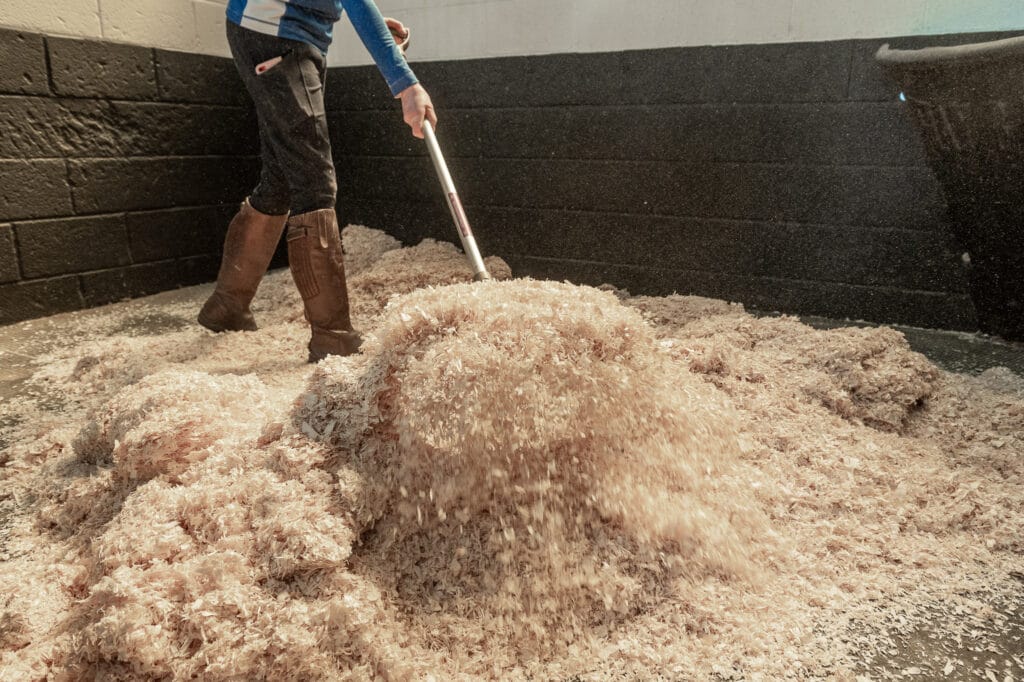
It’s one of the most-asked questions we get, and the honest answer is: it depends. There’s no single rule that fits every horse, every bedding type, and every yard routine. What we can do is walk through the main factors that decide it, so you can work out a sensible routine for your own situation rather than just copying what your neighbour does (their horse probably has very different habits to yours).
The Big Factor: How Much Time Your Horse Spends Inside
This is the single biggest thing that determines your mucking out workload.
Stabled All Day
If your horse is in for long stretches, whether through winter turnout restrictions, box rest, or simply your yard’s routine, droppings and wet patches build up fast. Most stable management guidance recommends mucking out twice a day for horses kept in all day: once first thing, and again later on. Skipping out in between to whip out any fresh droppings keeps things from getting out of hand by the second proper muck out.
In Overnight, Out By Day
This is the most common pattern for leisure horses, and it’s a bit more forgiving. One full muck out in the morning, once your horse has gone out, is generally enough to deal with an overnight shift’s worth of mess. A quick skip out before they come back in the evening just tidies up any odds and ends.
Out Most Of The Time, Only In Occasionally
If your horse only pops in for feeding, grooming, or to escape flies, you can usually get away with skipping out as needed rather than a full daily change. The bed simply isn’t being used enough to need it.
How Messy Is Your Horse?
Every horse owner knows there’s a world of difference between the tidy soul who does their business in one corner and leaves the rest of the bed pristine, and the horse who seems to consider the entire stable a toilet, digs everything up, then rolls in it for good measure.
- Clean, tidy horses: can often go several days between a full change, with droppings picked out daily and minimal wet to deal with.
- Average horses: usually need wet patches addressed daily, with a fuller change every few days to a week depending on bedding type.
- Messy or box-walking horses: may need wet and soiled areas dealt with more than once a day, and will get through noticeably more fresh bedding as a result. If this sounds like yours, leaning towards a highly absorbent bedding (see our bedding types post) will save you both time and money.
What Bedding You’ve Chosen Changes the Maths
Different materials cope with moisture differently, which directly affects how often you need to intervene.
- Straw: less absorbent, so wet patches need addressing fairly regularly to avoid a soggy, smelly bed. Daily attention to wet areas is sensible.
- Wood shavings and large flakes: absorb well and droppings sit on top, making daily picking out easy. A fuller strip every few days to a week is typical for many yards.
- Wood pellets: extremely absorbent once expanded, which means they can go a little longer between full changes, though the wet area itself should still be addressed daily.
- Miscanthus and rape straw: their high absorbency means moisture is locked away from the surface effectively, allowing many owners to comfortably stretch to a weekly full change while still removing droppings daily.
As a general rule of thumb across most bedding types, a complete bed change every one to two weeks works well for those running a semi deep litter system, with droppings removed daily throughout.
Bed Depth Plays a Role Too
A shallow bed soaks up moisture quickly and needs topping up or changing more often simply because there isn’t much material there to do the job. A generous, properly built up bed of four to six inches or more gives you more buffer, meaning you can go a little longer between full changes without the floor showing through or your horse standing in damp patches.
Deep Litter Versus Daily Full Muck Out
This is as much a personal choice as a practical one, and it’s worth being honest with yourself about which suits your routine.
Daily full muck out means lifting everything out, droppings and wet bedding alike, and relaying fresh material each day. It’s the most labour and bedding-intensive approach, but it keeps ammonia and dust to an absolute minimum, which matters a great deal for horses with any respiratory sensitivity.
Deep litter means removing droppings only and topping up with fresh bedding on top, letting the base compress over time. It saves significant time and bedding cost, and many horses genuinely seem to enjoy the deep, warm bed it creates. The catch is that it must be lifted and fully cleared out periodically, generally every few weeks at minimum, ideally more often, since the British Horse Society notes this system carries a higher ammonia exposure and isn’t the kindest option for respiratory health if left too long. If you do deep litter, keep a close eye on smell and dampness as your cue that it’s time for a proper strip out, rather than working to a fixed calendar date.
Semi deep litter sits in the middle: droppings out daily, only the worst of the wet removed day to day, with a complete change once a week or so. For most leisure horses on a sensible routine, this tends to be the easiest balance of cost, time, and welfare.
A Word on Respiratory Health
If your horse has any history of coughing, allergies, or general respiratory sensitivity, the advice consistently points one way: more frequent full changes beat deep litter every time. Ammonia and dust build up the longer bedding sits, and a horse breathing that in for hours overnight is at far greater risk of irritation than one on a bed that’s regularly refreshed. For these horses, we’d always recommend prioritising a low dust bedding and a closer-to-daily routine over the time savings of deep litter.
Putting It All Together
There’s no single correct answer to “how often”, only the routine that fits your particular horse, your bedding, and the time you’ve got available. As a starting point:
- Pick droppings out daily, always, regardless of system
- Address wet patches at least daily if your horse is stabled for long periods
- Plan a full bed change somewhere between every few days and every two weeks, leaning towards more frequent if your horse is messy, your bedding is less absorbent, or respiratory health is a concern
- Trust your nose and your eyes over any fixed schedule. If it smells of ammonia or looks soggy, it’s time, regardless of what day it is
If you’d like help working out how much bedding you’ll need for your routine, or want to switch to something more absorbent to cut down on changes, we’re always happy to talk it through.